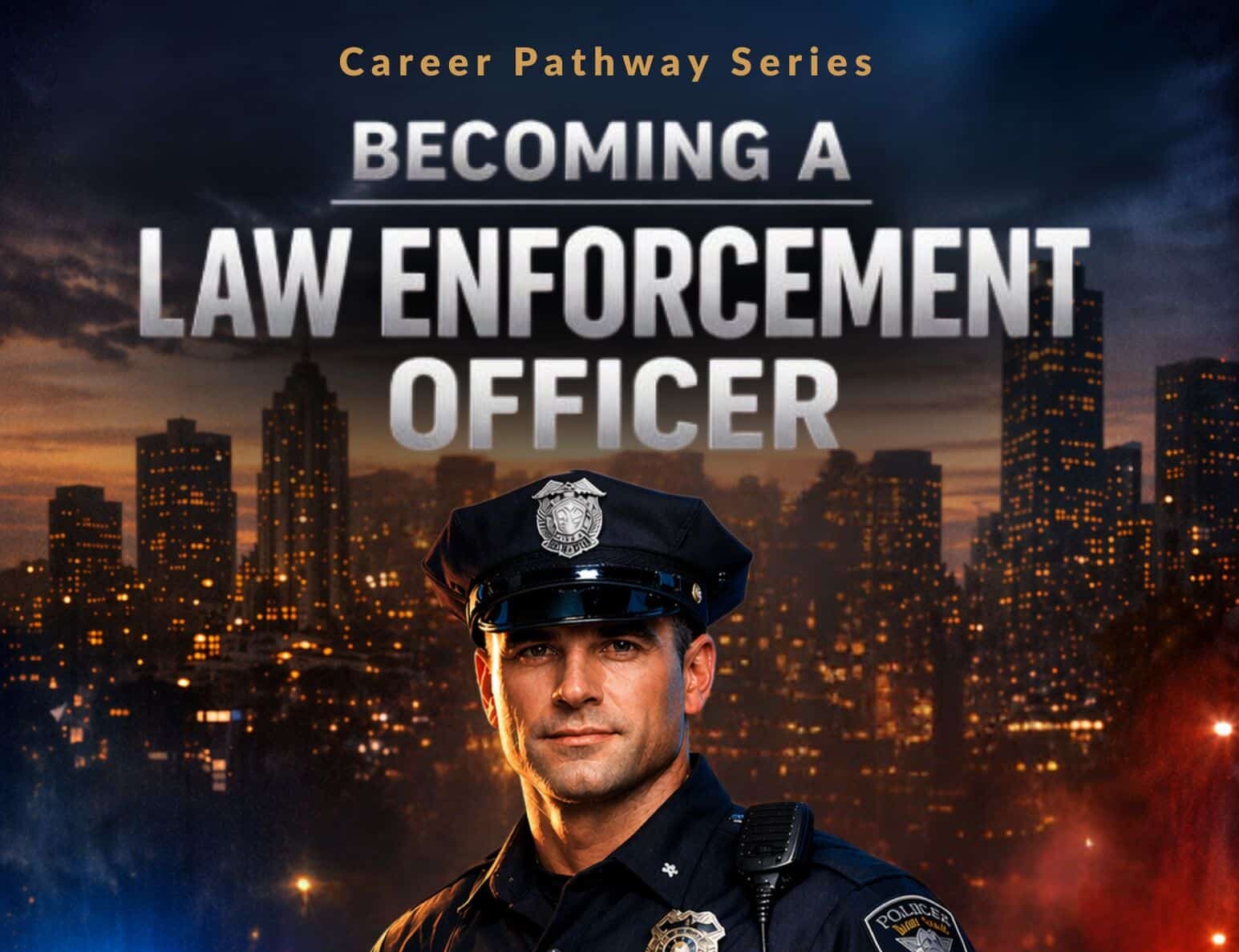
Course Title: A Career in Law Enforcement (Police Work)
Number of Credits: 2 Credits (30 hours)
UMass Global University Course Code: EDRU 9959
Objectives
LEARN CONCEPT 1: Law enforcement is about service, responsibility, and real-world problem-solving—not what you see on TV. Most of the job involves communication, decision-making, and community interaction rather than high-intensity action.
LEARN CONCEPT 2: Law enforcement offers multiple career paths, but almost all begin in patrol. Patrol experience builds the foundation required for advancement into investigations, specialized units, and leadership roles.
LEARN CONCEPT 3: The profession demands strong communication, sound judgment, physical fitness, and personal integrity. These qualities are evaluated long before hiring and can be developed starting now.
LEARN CONCEPT 4: The hiring process is rigorous and selective, designed to evaluate readiness, character, and trustworthiness. Preparation, honesty, and consistency are what separate successful candidates from the rest.
Course Overview
Law enforcement is one of the most demanding and impactful careers in the United States. This course introduces students to the realities of the profession—what officers actually do, how different agencies operate, and what it takes to enter and succeed in the field.
From Observer to Prepared Applicant
Most people see law enforcement from the outside. This course shifts that perspective by explaining how the job actually works—from patrol responsibilities to report writing, crisis response, and long-term investigations.
Students will explore the structure of law enforcement agencies, daily responsibilities, career pathways, and hiring expectations. By the end of the course, students will understand not just the job—but how to prepare for it before ever applying.
The 4 Traits of Successful Law Enforcement Candidates
Communication: Listening, de-escalation, and clear report writing
Judgment: Decision-making under pressure and situational awareness
Physical Fitness: Strength, endurance, and long-term conditioning
Character: Integrity, accountability, discipline, and professionalism
Course Outline
- Introduction: What Is Law Enforcement?
- Chapter 1: What Police Officers Actually Do
Chapter 2: Types of Law Enforcement Careers
Chapter 3: Skills and Traits Needed - Quiz 1 (Chapters 1–3)
- Chapter 4: Education and Requirements
Chapter 5: The Hiring Process
Chapter 6: How to Start Now - Quiz 2 (Chapters 4–6)
- Final Exam (Essay-Based)
Final Reflection
Description of Activities
- Read and analyze course content and real-world law enforcement scenarios
- Watch career-focused videos on law enforcement roles and responsibilities
- Complete quizzes to assess understanding of key concepts
- Participate in discussions about ethical situations, decision-making, and community interactions
- Reflect on personal readiness, strengths, and areas for improvement
- Complete a final written essay and personal action plan