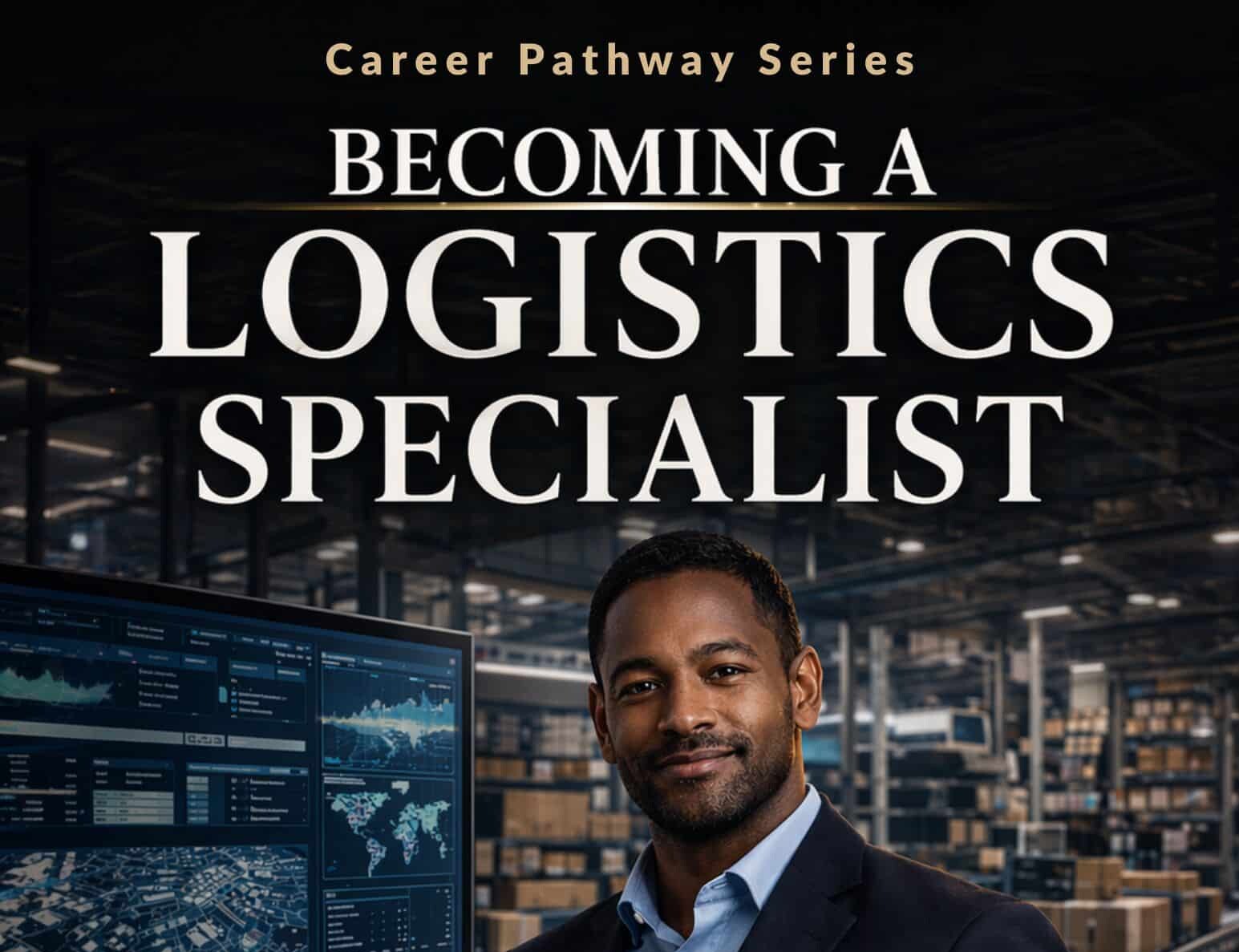
Course Title: ON THE MOVE Logistics & Supply Chain Management
Number of Credits: 2 Credits (30 hours)
UMass Global University Course Code: EDRU 9951
Objectives
LEARN CONCEPT 1: Logistics is the invisible system that moves goods, information, and resources across the world. It is driven by coordination, efficiency, and real-time problem-solving—not just transportation.
LEARN CONCEPT 2: Supply chain management extends beyond logistics, connecting suppliers, manufacturers, warehouses, and customers into one integrated system that must function seamlessly.
LEARN CONCEPT 3: Success in logistics requires analytical thinking, adaptability, communication, and technological literacy. These skills are essential for managing complex, fast-moving systems.
LEARN CONCEPT 4: Careers in logistics are diverse and accessible, but advancement depends on understanding operations, cost efficiency, and data-driven decision-making from entry-level roles upward.
Course Overview
Logistics and supply chain management power the global economy. Every product—from food to electronics—depends on systems that move goods efficiently from origin to destination. This course introduces students to how those systems work, who operates them, and how to build a career within them.
From Consumer to System Thinker
Most people interact with logistics every day without realizing it. This course shifts that perspective by breaking down how products move through warehouses, transportation networks, and delivery systems.
Students will explore real-world logistics operations, major companies, technology innovations, and decision-making challenges. By the end of the course, students will understand not just how logistics works—but how to think like a logistics professional.
The 4 Traits of Successful Logistics Professionals
Analytical Thinking: Solving routing, cost, and efficiency problems using data
Adaptability: Responding to disruptions, delays, and changing demand
Communication: Coordinating across teams, suppliers, and customers
Technical Awareness: Understanding systems like routing software, automation, and tracking tools
Course Outline
- Introduction: The Invisible Engine Powering the World
- Chapter 1: What Is Logistics?
- Chapter 2: The Giants of Logistics
- Chapter 3: Supply Chain Management — The Big Picture
- Quiz 1 (Chapters 1–3)
- Chapter 4: Technology Driving Logistics
- Chapter 5: Real-World Scenarios — Logistics Decisions
- Chapter 6: The Business Side — Costs, Margins & Careers
- Quiz 2 (Chapters 4–6)
- Final Exam (Essay-Based)
- Final Reflection
Description of Activities
- Read and analyze course content focused on logistics systems and supply chains
- Watch industry videos demonstrating real-world logistics operations and technology
- Complete quizzes to assess understanding of key logistics concepts
- Participate in discussions analyzing real-world logistics challenges and decision-making scenarios
- Evaluate trade-offs between cost, speed, and reliability in logistics systems
- Reflect on personal skills, career interests, and readiness for logistics roles
- Complete a final written essay and personal logistics strategy