Course Title: Becoming A Digital Marketing SpecialistNumber of Credits: 1 Credits (15 hours)Click Here to View SyllabusUMass Global University Course Code: EDRU 9965Four Concepts That Will Change How You See the Internet
LEARN CONCEPT 1: Every ad, post, and email you see was a deliberate business decision.Nothing online happens by accident in marketing. The color of a button, the exact words in a headline, the time a post goes live, all of it is tested and intentional. When you understand this, you stop being a passive consumer and start seeing the invisible architecture of the digital world.LEARN CONCEPT 2: Attention is the most valuable currency of the digital age.Every platform, TikTok, Instagram, YouTube, Google, is competing for your eyeballs. Brands pay billions to get those eyeballs. The digital marketer's job is to earn attention, hold it, and direct it toward a business goal.LEARN CONCEPT 3: Data turns guesswork into strategy.Unlike traditional advertising where you hoped your billboard reached the right person, digital marketing tells you exactly who saw your ad, clicked it, bought something, and how much it cost to get them there. That data is power, and learning to read it is one of the most valuable skills in the world.LEARN CONCEPT 4: You can start building a digital marketing portfolio TODAY, with no budget.Run a social media page for a school club. Write a blog. Help a local business with their Instagram. Create a YouTube channel about something you love. Every piece of content you create is a portfolio item that demonstrates real-world skill to future employers.
Course OverviewThe 3 Cs of Digital Marketing, A Letter to Students
Dear Future Digital Marketer,Right now, someone is scrolling through their phone and stopping on a video, and that video was put there on purpose. A brand paid someone to plan it, create it, target the right audience, and measure whether it worked. That person is a digital marketer. And that job? It is one of the fastest-growing, highest-demand, most creative careers of the 21st century.Digital marketing sits at the intersection of creativity, psychology, data, and technology. You do not need to be a programmer. You do not need to be a graphic designer. You need to understand people, what they want, what they fear, what makes them click, share, and buy.This course will teach you the language, the tools, the strategies, and the career paths of digital marketing, and show you exactly how to start building real experience before you ever graduate.The internet is the world's biggest marketplace. Let's teach you how to thrive in it.
The 3 Cs of Digital MarketingEvery concept in this course connects back to three core principles. Master these and you will understand 80% of what every digital marketer does every day:
🎨CREATEBuild content that stops the scroll
🔗CONNECTReach the right people at the right time
💰CONVERTTurn attention into action and revenue
Course OutlineWelcome, The 3 Cs of Digital Marketing, A Letter to StudentsChapter 1, What IS Digital Marketing? The Digital LandscapeChapter 2, Social Media Marketing, Platforms, People & AlgorithmsChapter 3, Content is King, Creating Content That WorksChapter 4, SEO, The Science of Being Found OnlineChapter 5, Email, Paid Ads & Analytics, The Full CampaignChapter 6, Real-World Scenarios, Digital Marketing on the JobChapter 7, Your Digital Marketing Career, Jobs, Salaries & PortfolioDescription of Activities
Read through the lesson content and watch the videos
Take short quizzes
Complete a writing assignment to reflect on your own interest and skill set as related to the career pathway being considered in this lesson.
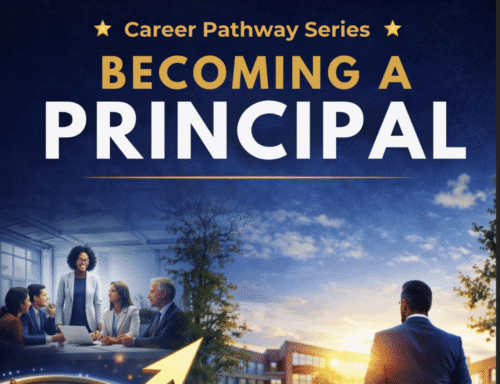
Course Title: BECOMING A SCHOOL PRINCIPALNumber of Credits: 2 Credits (30 hours)Click Here to View SyllabusUMass Global University Course Code: EDRU 9954ObjectivesLEARN CONCEPT 1: A principal’s most important job is not managing, it is leading.Management keeps things running. Leadership makes things better. A great principal does not simply maintain systems or enforce rules; they create a vision for what a school can become and inspire students, teachers, and families to work toward it together.LEARN CONCEPT 2: School culture is the most powerful force inside any school building.Culture shapes how students feel when they walk through the doors each morning. In strong schools, students feel safe, teachers feel supported, and families feel welcomed. Principals influence school culture more than anyone else because their leadership sets the emotional tone for the entire community.LEARN CONCEPT 3: Data is a school leader’s compass, not their judge.Attendance rates, test scores, graduation rates, discipline reports, and teacher retention all tell a story about a school. Effective principals use data with curiosity and compassion to guide improvement, solve problems, and ensure every student receives the support they need.LEARN CONCEPT 4: The best principals were almost always strong teachers first.School leadership begins with understanding teaching and learning at a deep level. Principals who have experienced the challenges and rewards of the classroom are better equipped to support teachers, connect with students, and make informed instructional decisions.
Course Overview
Every school needs strong leadership to help students succeed, teachers grow, and communities thrive. This course introduces students to the world of educational leadership and explores what principals actually do each day behind the scenes.The 3 Ls of School LeadershipEvery concept in this course connects back to three foundational principles that define outstanding school leaders:🧭LEAD — Guide your school with vision, courage, and clarity📚LEARN — Remain a lifelong learner of teaching, leadership, and people🌱LIFT — Support and elevate every student, teacher, and community member around youFrom Student to School LeaderMany people see principals only during announcements, assemblies, or disciplinary situations. In reality, principals are responsible for creating school culture, supporting teachers, solving problems, managing operations, communicating with families, and leading long-term school improvement efforts.Students will explore real-world leadership scenarios, learn how schools operate, and examine the educational pathways required to become a principal. By the end of this course, students will better understand both the opportunities and responsibilities that come with leading a school community.The 5 Traits of Successful School LeadersVision: Ability to create and communicate a meaningful direction for the schoolCommunication: Clear listening, speaking, and relationship-building skillsDecision-Making: Confidence in solving complex problems fairly and thoughtfullyOrganization: Managing people, schedules, systems, and responsibilities effectivelyEmpathy: Understanding and supporting the needs of students, teachers, and familiesCourse OutlineWelcome, The 3 Ls of School Leadership, A Letter to Students & EducatorsChapter 1, What Does a Principal Actually Do? A Day in the LifeChapter 2, The Journey to the Principal’s Office, Education & CredentialsChapter 3, Leadership That Transforms Schools, Culture, Vision & PeopleChapter 4, The Business Side of Running a School, Budgets, Data & ResourcesChapter 5, Real-World Scenarios, Decisions a Principal Makes Every DayChapter 6, Working with Communities, Parents & School BoardsChapter 7, Your Career Roadmap, From Student to School LeaderQuiz 1, Chapters 1–3 Knowledge CheckQuiz 2, Chapters 4–7 Knowledge CheckFinal Essay, Your Leadership Vision StatementResources, Recommended Books, Certifications, Videos & OrganizationsDescription of Activities
Read and analyze course chapters and leadership case studies
Watch videos about school leadership, educational systems, and decision-making
Participate in classroom discussions about school culture and leadership challenges
Complete reflection assignments about personal leadership strengths and goals
Practice solving realistic school leadership scenarios
Engage in collaborative activities involving communication and teamwork
Complete quizzes to assess understanding of educational leadership concepts
Develop a final written leadership vision statement
Course Title: Becoming A Project ManagerNumber of Credits: 1 Credits (15 hours)Click Here to View SyllabusUMass Global University Course Code: EDRU 9953Objectives
Understand what Project Managers do.
Understanding how to manager the 3 main elements of Time, Budget and Quality
Learn the steps for becoming an Effective Project Manager
Course Title: ON THE MOVE Logistics & Supply Chain Management Number of Credits: 2 Credits (30 hours)Click Here to View SyllabusUMass Global University Course Code: EDRU 9951ObjectivesLEARN CONCEPT 1:Logistics is the invisible system that moves goods, information, and resources across the world. It is driven by coordination, efficiency, and real-time problem-solving—not just transportation.LEARN CONCEPT 2:Supply chain management extends beyond logistics, connecting suppliers, manufacturers, warehouses, and customers into one integrated system that must function seamlessly.LEARN CONCEPT 3: Success in logistics requires analytical thinking, adaptability, communication, and technological literacy. These skills are essential for managing complex, fast-moving systems.LEARN CONCEPT 4: Careers in logistics are diverse and accessible, but advancement depends on understanding operations, cost efficiency, and data-driven decision-making from entry-level roles upward.
Course Overview
Logistics and supply chain management power the global economy. Every product—from food to electronics—depends on systems that move goods efficiently from origin to destination. This course introduces students to how those systems work, who operates them, and how to build a career within them.
From Consumer to System Thinker
Most people interact with logistics every day without realizing it. This course shifts that perspective by breaking down how products move through warehouses, transportation networks, and delivery systems.Students will explore real-world logistics operations, major companies, technology innovations, and decision-making challenges. By the end of the course, students will understand not just how logistics works—but how to think like a logistics professional.
The 4 Traits of Successful Logistics Professionals
Analytical Thinking:Solving routing, cost, and efficiency problems using dataAdaptability: Responding to disruptions, delays, and changing demandCommunication:Coordinating across teams, suppliers, and customersTechnical Awareness: Understanding systems like routing software, automation, and tracking tools
Course Outline
Introduction: The Invisible Engine Powering the World
Chapter 1: What Is Logistics?
Chapter 2: The Giants of Logistics
Chapter 3: Supply Chain Management — The Big Picture
Course Title: Becoming A Construction Worker (Electrical, Plumbing, HVAC)Number of Credits: 1 Credits (15 hours)Click Here to View SyllabusUMass Global University Course Code: EDRU 9950ObjectivesWhat You'll Be Able to Do After This Course
✓
Identify 3+ construction careers that match your income goals, work style, and timeline
✓
Make an informed choice between trades and college — knowing the real cost and payoff of each
✓
Name every Fatal Four hazard and explain how it's prevented on a real job site
✓
Take 2 documented steps toward an apprenticeship, trade school, or degree program
✓
Complete a personal 30-Day Action Plan and walk out ready to execute it
Course OverviewBefore a shovel hits the ground, someone has already planned the entire project. This unit covers those roles — the people who lead, coordinate, and manage construction. They pay well, grow fast, and are urgently in demand.Course OutlineUnit 1 Management and Oversight CareersUnit 2 Skilled Trades; Part 1 The Core CraftsUnit 3 Skilled Trades; Part 2 Specialty and Emerging TradesUnit 4 SafetyUnit 5 Your First Steps: Apprenticeships, Trade School & CertificationsUnit 6 Degrees, Licensing and Your Career Game PlanDescription of Activities
Read through the lesson content and watch the videos
Take short quizzes
Complete a writing assignment to reflect on your own interest and skill set as related to the career pathway being considered in this lesson.
Course Title: Becoming An Office AdministratorNumber of Credits: 1 Credits (15 hours)Click Here to View SyllabusUMass Global University Course Code: EDRU 9960Objectives
Understand what Office Administrators do.
Understand the mindset Office Administrators.
Learn the steps for becoming an Effective Office Administrator
Course OverviewWhat is an Office Administrator?At its core, an Office Administrator is responsible for managing the day-to-day operations of an organization. They organize systems, support staff, coordinate activities, and ensure that everything runs efficiently.But this definition, while accurate, is incomplete.An Office Administrator is not simply someone who answers emails or arranges files. They are:
A coordinator who connects people and processes
A planner who thinks ahead and prevents problems
A communicator who ensures information flows clearly
A problem-solver who steps in when things begin to break down
A stabilizing force in a fast-moving environment
If an organization were a machine, the Office Administrator would be the engine that keeps everything running smoothly — not always visible, but absolutely essential.Course OutlineChapter 1, The Invisible Engine Behind an OrganizationChapter 2, The Pathway of becoming an Office AdministratorChapter 3, Inside the role of an Office AdministratorChapter 4, Getting StartedChapter 5, The Power of DetailChapter 6, Professional GrowthDescription of Activities
Read through the lesson content and watch the videos
Take short quizzes
Complete a writing assignment to reflect on your own interest and skill set as related to the career pathway being considered in this lesson.
Post written responses in a forum
Final Project: Personal Reflection Essay
Write about the Key Behaviors That Reflect Professional Attitude
A professional attitude is seen through everyday actions. Some important behaviors include:
Being punctual and respecting time
Communicating clearly and respectfully
Taking responsibility for tasks
Paying attention to details
Staying calm under pressure
Being willing to learn and improve
These behaviors may seem simple, but they have a powerful effect over time.
Lifting Every Voice through Academic Discourse and Public Speaking – Online Professional Development Course
This 1-credit online course is designed to give teachers practical ways they can help students find their voices and develop their public speaking skills.
Click Here to View SyllabusUMass Global University Course Code: EDLU 9949Course Description
“Public speaking” doesn’t only apply to standing on a stage in front of thousands of people and giving a speech. Public speaking takes place every day in classrooms, but not all students are comfortable with it. If you’d like to help your students speak up and speak out, you’ll enjoy this online class on public speaking. Many students are afraid to speak up about issues that are important to them. Or they might want to be heard, but don’t know how to jump into the discussions. In this professional development course for teachers, you’ll learn how to make a difference in your student’s lives by facilitating and accommodating participation from all of your students. The course includes real-world tips and strategies for helping students articulate their ideas, negotiate and discuss them with others, and strengthen their points of view and voices.
Designed for all types of teachers, this online professional development course on public speaking and academic discourse includes best practices for:
how to incorporate more academic discourse throughout content instruction
how to facilitate debate, speech-giving, and spoken word
how to overcome barriers to effective speaking
This 1-credit online course is approved by LAUSD for salary points and by other districts in California for professional development credits or graduate-level credits available through University of Massachusetts Global. You can check with your school district to find out which professional development credit type you need.
Learning Outcomes
In this online course, you’ll learn how to help students engage in academic discourse and improve their public speaking skills.
Number of Professional Development Credits / Salary Points
Teachers throughout California and the U.S. can earn 1 professional development credit by completing this online course or 1 graduate level credit (awarded through University of Massachusetts Global, formerly known as Brandman University). This course is also worth 1 salary point awarded by the LAUSD (Los Angeles Unified School District), depending on the credit type you choose.
Target Audience
This course is designed for all types of Pre-K through 12th grade teachers, including: early childhood education teachers, elementary school teachers, middle school teachers, high school teachers, special education teachers, staff, and administrators.
Additional Information/Questions
Here’s additional information about the Academic Discourse and Public Speaking online professional development course:
This course is 100% online – the coursework and interaction.
You’ll have six months to complete all of your coursework from the date that you purchase this online course.
Once you’ve successfully completed the Academic Discourse and Public Speaking course, you’ll earn 1 LAUSD salary point, 1 professional development credit, or 1 graduate-level professional development credit.
If you have any questions about the Academic Discourse and Public Speaking course, or any of our other professional development online courses, please email help@education4equity.com.
Related Courses
If you’re interested in Academic Discourse and Public Speaking you might also like these related online courses:
Lifting Every Voice through Creative Writing and Publishing (3 credits / LAUSD Salary Points)
Arts Integration for Equity and Excellence - Music (3 credits / LAUSD Salary Points)
Disclaimer
Disclaimer: This online professional development class has been approved by the LAUSD and UTLA Joint Salary Point Credit Committee. Please note, however, that the LAUSD does not endorse this online class provider over any other.
Cognitively Guided Instruction (CGI) Math – Online Professional Development Course
This 1-credit online course provides an introduction to Cognitively Guided Instruction (CGI) and how to integrate it into teaching mathematics in PreK-12.
Click Here to View SyllabusUMass Global University Course Code: EDTU 9052Course Description
More and more districts and schools are requiring that CGI be implemented into classrooms, and for good reason. Cognitively Guided Instruction has proven to be an effective teaching strategy. If you’re interested in what CGI is and how it can be applied to your students, or if you’ve been looking for online CGI math training, this course is for you.
At its core, CGI teaches you how to listen to your students in order to understand their thinking. Once you understand how students think, you can adjust your teaching and provide support for their mathematical learning.
In this online CGI math course, you’ll get an in-depth look at the foundational ideas behind CGI, the rationale for using it to teach math, and specific ways to practice it in your classroom. Once you learn the principles of CGI, you can apply them to any type of math curriculum.
Designed for preK-12 school teachers, this online professional development course on Cognitively Guided Instruction (CGI) for math includes:
an overview of CGI for math
examples of CGI in math (including activities and videos)
benefits of using CGI for math and examples of its success
how to use CGI (including examples of teacher and student interactions using CGI in math)
how to implement CGI (including specific examples of activities)
CGI and CCSS (aligning CGI with Common Core State Standards)
This 1-credit online course is approved by LAUSD for salary points and by other districts in California for professional development credits or graduate-level credits available through University of Massachusetts Global. You can check with your school district to find out which professional development credit type you need.
The course is comprised of 6 units. For each unit, you’ll read a lesson, watch a video, take a quiz, and complete an assignment. Throughout the professional development course, you’ll post your responses in an online discussion forum, for interaction with other teachers who are taking the online course.
Reviews
"This course provided me with a more in-depth look at what the foundational ideas are for CGI. Furthermore, I was able to really understand what Cognitively Guided Instruction is, what it looks like, and how it should be executed."
"My District and my Principal want all teachers at my school to teach math using CGI. This course has built my confidence, enthusiasm, and understanding of how to teach CGI Math."
"Our school and district are planning on implementing CGI into classrooms so this course really helped me gain more knowledge about this subject. It was helpful to see strategies that are currently being used in classroom and it helped me develop an idea of how to begin incorporating it into my own class."
"I know my school is going to start doing CGI and this course helped give me some good ideas and a solid foundation to build on!"
"As a school we are performing very low in math, therefore, CGI is a very new practice at my school. This course has given me more confidence in implementing it."
Learning Outcomes
In this online course, you’ll learn what Cognitively Guided Instruction (CGI) is and ways to implement it when you’re teaching math.
Number of Professional Development Credits / Salary Points
Teachers throughout California and the U.S. can earn 1 professional development credit by completing this online course or 1 graduate level credit (awarded through University of Massachusetts Global, formerly known as Brandman University). This course is also worth 1 salary point awarded by the LAUSD (Los Angeles Unified School District), depending on the credit type you choose.
Target Audience
This course is designed for preK-12 school teachers, staff, and administrators.
Additional Information/Questions
Here’s additional information about the Cognitively Guided Instruction (CGI) Math online professional development course:
This course is 100% online – the coursework and interaction.
You’ll have six months to complete all of your coursework from the date that you purchase this online course.
Once you’ve successfully completed the Cognitively Guided Instruction (CGI) Math course, you’ll earn 1 LAUSD salary point, 1 professional development credit, or 1 graduate-level professional development credit.
If you have any questions about the Cognitively Guided Instruction (CGI) Math course, or any of our other professional development online courses, please email help@education4equity.com.
Related Courses
If you’re interested in Cognitively Guided Instruction (CGI) Math you might also like these related online courses:
Disclaimer
Disclaimer: This online professional development class has been approved by the LAUSD and UTLA Joint Salary Point Credit Committee. Please note, however, that the LAUSD does not endorse this online class provider over any other.
STEAM Everyday for Everyone – Online Professional Development Course
This 1-credit online course provides practical tips, ideas, and resources for how to integrate STEAM into all of your lesson plans and curriculum.
Click Here to View SyllabusUMass Global University Course Code: EDTU 9026Course Description
In years past, core subjects such as science, math, and engineering were distinctly separate from the arts, and seemingly students had an interest in one type of education or the other, but never both. Research has shown, however, that students who have access to the arts, as well as science and math, are more invested in learning, more motivated to come to school, and more apt to perform better in all subjects. That’s why STEAM education is become more commonplace, as it rapidly gains ground inside elementary schools, middle schools, and high schools, and as districts around the country add STEAM schools. If you’d like to learn more about STEAM education (Science, Technology, Engineering, the Arts, and Math) and how to incorporate it into your teaching, this online professional development course is for you.
The class is based on the notion that every student is a scientist-artist, but that the joy of creativity and artistic expression are often squelched as students are introduced to more rigid and less stimulating approaches to learning.
But why can’t the “artist” in everyone flourish, not only in school, but also in life…not only when students are young, but also throughout their lives.
In this online STEAM course, you’ll learn how to assimilate the arts and sciences into your lesson plans and curriculum, in order to provide a richer learning experience for your students.
Designed for all types of teachers, this online professional development course on STEAM covers a variety of topics, including:
an overview STEAM
research and statistics that support offering STEAM for all students
3-dimensional learning
incorporating context into learning
opportunities for academic discourse
student thinking and reflection
including the arts in teaching and learning activities
This 1-credit online course is approved by LAUSD for salary points and by other districts in California for professional development credits or graduate-level credits available through University of Massachusetts Global. You can check with your school district to find out which professional development credit type you need.
The course is comprised of 6 units. For each unit, you’ll read a lesson, watch a video, take a quiz, and complete an assignment. Throughout the professional development course, you’ll post your responses in an online discussion forum, for interaction with other teachers who are taking the online course.
Reviews
"Excellent course. Will be recommending it to colleagues."
"My science activities in the past were not very well-rounded and rather one dimensional. This course offered me a new perspective on what effective science instruction should look like."
"Our school is a STEAM school and it provided me with new information, resources and ideas that I can immediately bring back into my own classroom and share with colleagues."
"STEAM has definitely been challenging for me to integrate into my curriculum, however I have gained the confidence needed to try new lessons in my own class, thanks to this course."
"STEM is now becoming a real factor in our schools. Having an understanding of this has given me an opportunity to be more aware of the standards and what my colleagues are engaged in."
Learning Outcomes
In this online course, you’ll get new information, ideas, and resources for how to integrate STEAM into your curriculum.
Number of Professional Development Credits / Salary Points
Teachers throughout California and the U.S. can earn 1 professional development credit by completing this online course or 1 graduate level credit (awarded through University of Massachusetts Global, formerly known as Brandman University). This course is also worth 1 salary point awarded by the LAUSD (Los Angeles Unified School District), depending on the credit type you choose.
Target Audience
This course is designed for all types of Pre-K through 12th grade teachers, including: early childhood education teachers, elementary school teachers, middle school teachers, high school teachers, special education teachers, staff, and administrators.
UMass Global University Course Code: EDTU 9026Additional Information/Questions
Here’s additional information about the STEAM Everyday for Everyone online professional development course:
This course is 100% online – the coursework and interaction.
You’ll have six months to complete all of your coursework from the date that you purchase this online course.
Once you’ve successfully completed the STEAM Everyday for Everyone course, you’ll earn 1 LAUSD salary point, 1 professional development credit, or 1 graduate-level professional development credit.
If you have any questions about the STEAM Everyday for Everyone course, or any of our other professional development online courses, please email help@education4equity.com.
Related Courses
If you’re interested in STEAM Everyday for Everyone you might also like these related online courses:
Disclaimer
Disclaimer: This online professional development class has been approved by the LAUSD and UTLA Joint Salary Point Credit Committee. Please note, however, that the LAUSD does not endorse this online class provider over any other.









 "This course provided me with a more in-depth look at what the foundational ideas are for CGI. Furthermore, I was able to really understand what Cognitively Guided Instruction is, what it looks like, and how it should be executed."