

|
- Read through the lesson content and watch the videos
- Take short quizzes
- Complete a writing assignment to reflect on your own interest and skill set as related to the career pathway being considered in this lesson.
- Post written responses in a forum
|


| LEARN CONCEPT 1: Saving money reaps rewards in the future. This sounds obvious, yet most people never do it. The student who saves $50 a month from age 16 will have over $600 by graduation. Invested wisely, that seed grows. Know this concept and practice it, and you will win big. LEARN CONCEPT 2: Spending money on things that make money is called investing. Jake (you'll meet him in Chapter 7) bought a truck and a commercial mower with his savings, not sneakers. That purchase made him more money. Spending on things that earn you MORE money is the single biggest difference between the wealthy and everyone else. Know this concept and you will win big. LEARN CONCEPT 3: A Profit & Loss (P&L) report shows you whether you are winning or losing with money. If you track what comes in and what goes out, you will never be surprised by an empty bank account. Every business uses a P&L. Every finance professional read one. You will too, by the end of this course. LEARN CONCEPT 4: A little discipline on your finances today creates long-term freedom. Jake summed it up perfectly at his graduation party. When asked what was the best thing he bought with his savings, he said: "Freedom. I bought freedom." Discipline is not about being cheap. It is about being in control. |
| Dear Future Finance Rockstar, Have you ever wondered why some people always seem to have money while others are always broken, even when they earn the same amount? The answer is not luck. It is not talent. It is not even how much you earn. It is three simple things: |
| M1 MAKE Money Earn it, jobs, side hustles, businesses | M2 MANAGE Money Budget, save, track every dollar | M3 MULTIPLY Money Invest, make your money work for you |
| 👩🏫 TEACHER TIP When speaking to high schoolers, don't try to push every concept at once. Keep it simple and come back to these 3 M's again and again. The lemonade stand, the grass-cutting business, and the newspaper route help make these concepts practical and real. If students remember only one thing from this course, let it be: Make, Manage, multiply. |
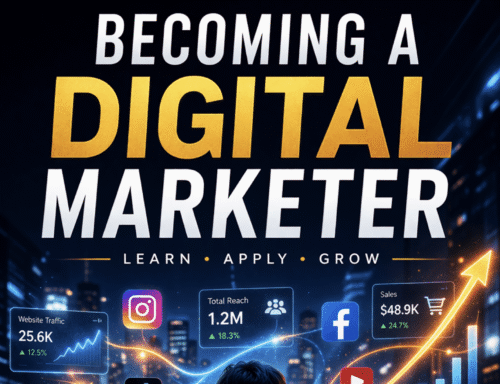
| LEARN CONCEPT 1: Every ad, post, and email you see was a deliberate business decision. Nothing online happens by accident in marketing. The color of a button, the exact words in a headline, the time a post goes live, all of it is tested and intentional. When you understand this, you stop being a passive consumer and start seeing the invisible architecture of the digital world. LEARN CONCEPT 2: Attention is the most valuable currency of the digital age. Every platform, TikTok, Instagram, YouTube, Google, is competing for your eyeballs. Brands pay billions to get those eyeballs. The digital marketer's job is to earn attention, hold it, and direct it toward a business goal. LEARN CONCEPT 3: Data turns guesswork into strategy. Unlike traditional advertising where you hoped your billboard reached the right person, digital marketing tells you exactly who saw your ad, clicked it, bought something, and how much it cost to get them there. That data is power, and learning to read it is one of the most valuable skills in the world. LEARN CONCEPT 4: You can start building a digital marketing portfolio TODAY, with no budget. Run a social media page for a school club. Write a blog. Help a local business with their Instagram. Create a YouTube channel about something you love. Every piece of content you create is a portfolio item that demonstrates real-world skill to future employers. |
| Dear Future Digital Marketer, Right now, someone is scrolling through their phone and stopping on a video, and that video was put there on purpose. A brand paid someone to plan it, create it, target the right audience, and measure whether it worked. That person is a digital marketer. And that job? It is one of the fastest-growing, highest-demand, most creative careers of the 21st century. Digital marketing sits at the intersection of creativity, psychology, data, and technology. You do not need to be a programmer. You do not need to be a graphic designer. You need to understand people, what they want, what they fear, what makes them click, share, and buy. This course will teach you the language, the tools, the strategies, and the career paths of digital marketing, and show you exactly how to start building real experience before you ever graduate. The internet is the world's biggest marketplace. Let's teach you how to thrive in it. |
| 🎨 CREATE Build content that stops the scroll | 🔗 CONNECT Reach the right people at the right time | 💰 CONVERT Turn attention into action and revenue |

$179.00
$440.00

$179.00
$440.00

Every day, an increasing number of students experience trauma that may adversely affect their learning, relationships, and life-trajectories.
According to the Department of Justice, more than half of children in the U.S. were exposed to trauma in the past year, and 40% are direct victims of multiple acts of violence (higher percentages are represented in urban schools). This study also shows that students exposed to violence are more likely to be delinquent, struggle in and drop out of school; as well as to suffer from anxiety, depression, and PTSD, abuse drugs and alcohol, and engage in criminal activities (https://www.justice.gov/archives/defendingchildhood/facts-about-children-and-violence). Trauma can greatly affect students' ability to learn. But through trauma-informed instruction, teachers and other educators can be factors of healing towards success, despite these odds. This course guides educators through a paradigm shift, toward deeper understanding, heightened sensitivity, and increased efficacy in teaching students affected by trauma.
Reviews
"[This] was the best course I've taken in a long time and honestly MUCH more useful, better organized and informative than the Leadership and Equity course I took online with Harvard!"
Learning Outcomes
Participants learn to take an informed approach to instruction that can break the cycle of trauma.
This 2-credit online course is approved by LAUSD for salary points and by other districts in California for professional development credits or graduate-level credits available through University of Massachusetts Global. You can check with your school district to find out which professional development credit type you need.
Number of Professional Development Credits / Salary Points
Teachers throughout California and the U.S. can earn 2 professional development credits by completing this online course or 2 graduate level credits (awarded through University of Massachusetts Global, formerly known as Brandman University). This course is also worth 2 salary points awarded by the LAUSD (Los Angeles Unified School District), depending on the credit type you choose.
Target Audience
This course is designed for all types of Pre-K through 12th grade teachers, including: early childhood education teachers, elementary school teachers, middle school teachers, high school teachers, special education teachers, staff, and administrators.
Additional Information/Questions
Here’s additional information about the Trauma-Informed Instruction online professional development course:
If you have any questions about the Trauma-Informed Instruction course, or any of our other professional development online courses, please email help@education4equity.com.
Related Courses
If you’re interested in Trauma-Informed Instruction you might also like these related online courses:
Disclaimer
Disclaimer: This online professional development class has been approved by the LAUSD and UTLA Joint Salary Point Credit Committee. Please note, however, that the LAUSD does not endorse this online class provider over any other.