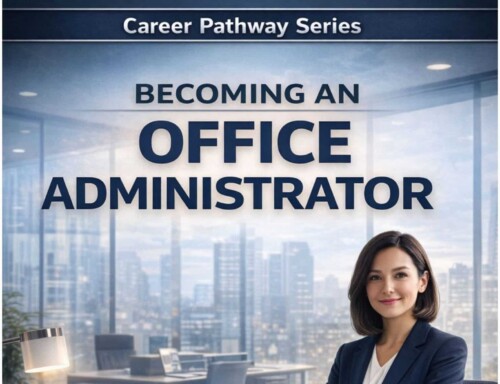
• Course Title: Becoming An Office Administrator Number of Credits: 1 Credits (15 hours) UMass Global University Course Code: EDRU 9960 Objectives
    1. Understand what Office Administrators do.
    2. Understand the mindset Office Administrators.
    3. Learn the steps for becoming an Effective Office Administrator
       Course Overview What is an Office Administrator? At its core, an Office Administrator is responsible for managing the day-to-day operations of an organization. They organize systems, support staff, coordinate activities, and ensure that everything runs efficiently. But this definition, while accurate, is incomplete. An Office Administrator is not simply someone who answers emails or arranges files. They are:
    • A coordinator who connects people and processes 
    • A planner who thinks ahead and prevents problems 
    • A communicator who ensures information flows clearly 
    • A problem-solver who steps in when things begin to break down 
    • A stabilizing force in a fast-moving environment 
    If an organization were a machine, the Office Administrator would be the engine that keeps everything running smoothly — not always visible, but absolutely essential.   Course Outline Chapter 1, The Invisible Engine Behind an Organization Chapter 2, The Pathway of becoming an Office Administrator Chapter 3, Inside the role of an Office Administrator Chapter 4, Getting Started Chapter 5, The Power of Detail Chapter 6, Professional Growth   Description of Activities
    1. Read through the lesson content and watch the videos
    2. Take short quizzes
    3. Complete a writing assignment to reflect on your own interest and skill set as related to the career pathway being considered in this lesson. 
    4. Post written responses in a forum
      Final Project: Personal Reflection Essay  

    Write about the Key Behaviors That Reflect Professional Attitude

    A professional attitude is seen through everyday actions. Some important behaviors include:
    • Being punctual and respecting time 
    • Communicating clearly and respectfully 
    • Taking responsibility for tasks 
    • Paying attention to details 
    • Staying calm under pressure 
    • Being willing to learn and improve 
    These behaviors may seem simple, but they have a powerful effect over time.
  • Course Title: Becoming A Construction Worker (Electrical, Plumbing, HVAC) Number of Credits: 1 Credits (15 hours) UMass Global University Course Code: EDRU 9950 Objectives What You'll Be Able to Do After This Course
    Identify 3+ construction careers that match your income goals, work style, and timeline
    Make an informed choice between trades and college — knowing the real cost and payoff of each
    Name every Fatal Four hazard and explain how it's prevented on a real job site
    Take 2 documented steps toward an apprenticeship, trade school, or degree program
    Complete a personal 30-Day Action Plan and walk out ready to execute it
      Course Overview Before a shovel hits the ground, someone has already planned the entire project. This unit covers those roles — the people who lead, coordinate, and manage construction. They pay well, grow fast, and are urgently in demand.   Course Outline Unit 1 Management and Oversight Careers Unit 2 Skilled Trades; Part 1 The Core Crafts Unit 3 Skilled Trades; Part 2 Specialty and Emerging Trades Unit 4 Safety Unit 5 Your First Steps: Apprenticeships, Trade School & Certifications Unit 6 Degrees, Licensing and Your Career Game Plan   Description of Activities
    1. Read through the lesson content and watch the videos
    2. Take short quizzes
    3. Complete a writing assignment to reflect on your own interest and skill set as related to the career pathway being considered in this lesson. 
    4. Post written responses in a forum
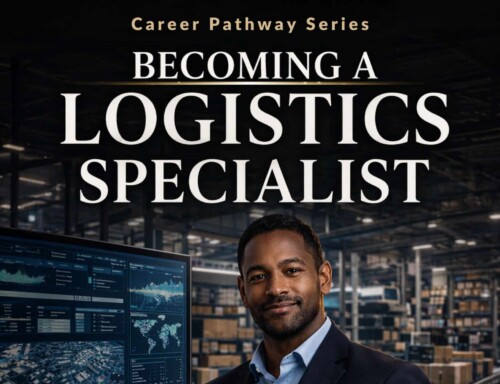
  • Course Title: ON THE MOVE Logistics & Supply Chain Management   Number of Credits: 2 Credits (30 hours) UMass Global University Course Code: EDRU 9951 Objectives LEARN CONCEPT 1: Logistics is the invisible system that moves goods, information, and resources across the world. It is driven by coordination, efficiency, and real-time problem-solving—not just transportation. LEARN CONCEPT 2: Supply chain management extends beyond logistics, connecting suppliers, manufacturers, warehouses, and customers into one integrated system that must function seamlessly. LEARN CONCEPT 3: Success in logistics requires analytical thinking, adaptability, communication, and technological literacy. These skills are essential for managing complex, fast-moving systems. LEARN CONCEPT 4: Careers in logistics are diverse and accessible, but advancement depends on understanding operations, cost efficiency, and data-driven decision-making from entry-level roles upward.  

    Course Overview

    Logistics and supply chain management power the global economy. Every product—from food to electronics—depends on systems that move goods efficiently from origin to destination. This course introduces students to how those systems work, who operates them, and how to build a career within them.

    From Consumer to System Thinker

    Most people interact with logistics every day without realizing it. This course shifts that perspective by breaking down how products move through warehouses, transportation networks, and delivery systems. Students will explore real-world logistics operations, major companies, technology innovations, and decision-making challenges. By the end of the course, students will understand not just how logistics works—but how to think like a logistics professional.

    The 4 Traits of Successful Logistics Professionals

    Analytical Thinking: Solving routing, cost, and efficiency problems using data Adaptability: Responding to disruptions, delays, and changing demand Communication: Coordinating across teams, suppliers, and customers Technical Awareness: Understanding systems like routing software, automation, and tracking tools

    Course Outline

    • Introduction: The Invisible Engine Powering the World
    • Chapter 1: What Is Logistics?
    • Chapter 2: The Giants of Logistics
    • Chapter 3: Supply Chain Management — The Big Picture
    • Quiz 1 (Chapters 1–3)
    • Chapter 4: Technology Driving Logistics
    • Chapter 5: Real-World Scenarios — Logistics Decisions
    • Chapter 6: The Business Side — Costs, Margins & Careers
    • Quiz 2 (Chapters 4–6)
    • Final Exam (Essay-Based)
    • Final Reflection
     

    Description of Activities

    • Read and analyze course content focused on logistics systems and supply chains
    • Watch industry videos demonstrating real-world logistics operations and technology
    • Complete quizzes to assess understanding of key logistics concepts
    • Participate in discussions analyzing real-world logistics challenges and decision-making scenarios
    • Evaluate trade-offs between cost, speed, and reliability in logistics systems
    • Reflect on personal skills, career interests, and readiness for logistics roles
    • Complete a final written essay and personal logistics strategy
  • Course Title: Becoming A Project Manager Number of Credits: 1 Credits (15 hours) UMass Global University Course Code: EDRU 9953 Objectives
    1. Understand what Project Managers do.
    2. Understanding how to manager the 3 main elements of Time, Budget and Quality
    3. Learn the steps for becoming an Effective Project Manager
       Course Overview   What is a Project Manager? A project manager is the person responsible for planning, executing, monitoring, and closing a project on time, within budget, and to the satisfaction of everyone involved. They are simultaneously a strategist, a communicator, a risk analyst, a motivator, and a problem-solver. When something goes wrong, they are the ones who figure out what to do next. When things go right, they are often the reason why, even if nobody quite realizes it. A project, formally defined, is a temporary endeavor with a defined beginning and end, undertaken to create something unique. Building a school mobile app, planning a community fundraiser, launching a new product line, redesigning a company website: all of these are projects. And every project needs someone who takes responsibility for making it happen.   Course Outline Introduction: Why Project Management Matters 3 Chapter 1: What Is Project Management? 4 Chapter 2: The Project Manager's Toolkit 6 Chapter 3: Career Path and Job Descriptions 8 Chapter 4: Real-World Applications and Case Studies 10 Chapter 5: Education and Certifications for Project Managers 12 Chapter 6: Launching Your Career as a Project Manager 14 Chapter 7: A Project Example – Building a Tennis Court 17   Description of Activities
    1. Read through the lesson content and watch the videos
    2. Take short quizzes
    3. Complete a writing assignment to reflect on your own interest and skill set as related to the career pathway being considered in this lesson. 
    4. Post written responses in a forum
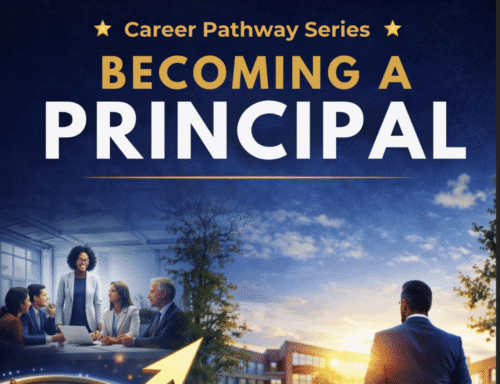
  • Course Title: BECOMING A SCHOOL PRINCIPAL  Number of Credits: 2 Credits (30 hours) UMass Global University Course Code: EDRU 9954 Objectives LEARN CONCEPT 1: A principal’s most important job is not managing, it is leading. Management keeps things running. Leadership makes things better. A great principal does not simply maintain systems or enforce rules; they create a vision for what a school can become and inspire students, teachers, and families to work toward it together. LEARN CONCEPT 2: School culture is the most powerful force inside any school building. Culture shapes how students feel when they walk through the doors each morning. In strong schools, students feel safe, teachers feel supported, and families feel welcomed. Principals influence school culture more than anyone else because their leadership sets the emotional tone for the entire community. LEARN CONCEPT 3: Data is a school leader’s compass, not their judge. Attendance rates, test scores, graduation rates, discipline reports, and teacher retention all tell a story about a school. Effective principals use data with curiosity and compassion to guide improvement, solve problems, and ensure every student receives the support they need. LEARN CONCEPT 4: The best principals were almost always strong teachers first. School leadership begins with understanding teaching and learning at a deep level. Principals who have experienced the challenges and rewards of the classroom are better equipped to support teachers, connect with students, and make informed instructional decisions.  

    Course Overview

    Every school needs strong leadership to help students succeed, teachers grow, and communities thrive. This course introduces students to the world of educational leadership and explores what principals actually do each day behind the scenes. The 3 Ls of School Leadership Every concept in this course connects back to three foundational principles that define outstanding school leaders: 🧭 LEAD — Guide your school with vision, courage, and clarity 📚 LEARN — Remain a lifelong learner of teaching, leadership, and people 🌱 LIFT — Support and elevate every student, teacher, and community member around you From Student to School Leader Many people see principals only during announcements, assemblies, or disciplinary situations. In reality, principals are responsible for creating school culture, supporting teachers, solving problems, managing operations, communicating with families, and leading long-term school improvement efforts. Students will explore real-world leadership scenarios, learn how schools operate, and examine the educational pathways required to become a principal. By the end of this course, students will better understand both the opportunities and responsibilities that come with leading a school community. The 5 Traits of Successful School Leaders Vision: Ability to create and communicate a meaningful direction for the school Communication: Clear listening, speaking, and relationship-building skills Decision-Making: Confidence in solving complex problems fairly and thoughtfully Organization: Managing people, schedules, systems, and responsibilities effectively Empathy: Understanding and supporting the needs of students, teachers, and families   Course Outline Welcome, The 3 Ls of School Leadership, A Letter to Students & Educators Chapter 1, What Does a Principal Actually Do? A Day in the Life Chapter 2, The Journey to the Principal’s Office, Education & Credentials Chapter 3, Leadership That Transforms Schools, Culture, Vision & People Chapter 4, The Business Side of Running a School, Budgets, Data & Resources Chapter 5, Real-World Scenarios, Decisions a Principal Makes Every Day Chapter 6, Working with Communities, Parents & School Boards Chapter 7, Your Career Roadmap, From Student to School Leader Quiz 1, Chapters 1–3 Knowledge Check Quiz 2, Chapters 4–7 Knowledge Check Final Essay, Your Leadership Vision Statement Resources, Recommended Books, Certifications, Videos & Organizations   Description of Activities
    • Read and analyze course chapters and leadership case studies
    • Watch videos about school leadership, educational systems, and decision-making
    • Participate in classroom discussions about school culture and leadership challenges
    • Complete reflection assignments about personal leadership strengths and goals
    • Practice solving realistic school leadership scenarios
    • Engage in collaborative activities involving communication and teamwork
    • Complete quizzes to assess understanding of educational leadership concepts
    • Develop a final written leadership vision statement
  • Course Title: Becoming A Digital Marketing Specialist Number of Credits: 1 Credits (15 hours) UMass Global University Course Code: EDRU 9965 Four Concepts That Will Change How You See the Internet
    LEARN CONCEPT 1:  Every ad, post, and email you see was a deliberate business decision. Nothing online happens by accident in marketing. The color of a button, the exact words in a headline, the time a post goes live, all of it is tested and intentional. When you understand this, you stop being a passive consumer and start seeing the invisible architecture of the digital world. LEARN CONCEPT 2:  Attention is the most valuable currency of the digital age. Every platform, TikTok, Instagram, YouTube, Google, is competing for your eyeballs. Brands pay billions to get those eyeballs. The digital marketer's job is to earn attention, hold it, and direct it toward a business goal. LEARN CONCEPT 3:  Data turns guesswork into strategy. Unlike traditional advertising where you hoped your billboard reached the right person, digital marketing tells you exactly who saw your ad, clicked it, bought something, and how much it cost to get them there. That data is power, and learning to read it is one of the most valuable skills in the world. LEARN CONCEPT 4:  You can start building a digital marketing portfolio TODAY, with no budget. Run a social media page for a school club. Write a blog. Help a local business with their Instagram. Create a YouTube channel about something you love. Every piece of content you create is a portfolio item that demonstrates real-world skill to future employers.
    Course Overview The 3 Cs of Digital Marketing, A Letter to Students  
    Dear Future Digital Marketer, Right now, someone is scrolling through their phone and stopping on a video, and that video was put there on purpose. A brand paid someone to plan it, create it, target the right audience, and measure whether it worked. That person is a digital marketer. And that job? It is one of the fastest-growing, highest-demand, most creative careers of the 21st century. Digital marketing sits at the intersection of creativity, psychology, data, and technology. You do not need to be a programmer. You do not need to be a graphic designer. You need to understand people, what they want, what they fear, what makes them click, share, and buy. This course will teach you the language, the tools, the strategies, and the career paths of digital marketing, and show you exactly how to start building real experience before you ever graduate. The internet is the world's biggest marketplace. Let's teach you how to thrive in it.
      The 3 Cs of Digital Marketing Every concept in this course connects back to three core principles. Master these and you will understand 80% of what every digital marketer does every day:  
    🎨 CREATE Build content that stops the scroll 🔗 CONNECT Reach the right people at the right time 💰 CONVERT Turn attention into action and revenue
      Course Outline Welcome, The 3 Cs of Digital Marketing, A Letter to Students Chapter 1, What IS Digital Marketing? The Digital Landscape Chapter 2, Social Media Marketing, Platforms, People & Algorithms Chapter 3, Content is King, Creating Content That Works Chapter 4, SEO, The Science of Being Found Online Chapter 5, Email, Paid Ads & Analytics, The Full Campaign Chapter 6, Real-World Scenarios, Digital Marketing on the Job Chapter 7, Your Digital Marketing Career, Jobs, Salaries & Portfolio Description of Activities
    1. Read through the lesson content and watch the videos
    2. Take short quizzes
    3. Complete a writing assignment to reflect on your own interest and skill set as related to the career pathway being considered in this lesson. 
    4. Post written responses in a forum
     
  • Becoming an Engineer– Online Professional Development Course

    This 2-credit online course addresses the thinking, purpose, skill set and mind set of an Engineer. Teachers and students alike will be delighted to realize that engineering is not a dry field but is rather a field that combines creativity with science, math, and design. Click Here to View Syllabus UMass Global University Course Code: EDRU 9962

    Course Description

    This course covers the following main topics related to a career path: Chapter 1, What IS Engineering? Six Branches, Infinite Possibilities Chapter 2, Engineering Legends & Breakthroughs, Stories That Changed the World Chapter 3, How Engineers Think, The Engineering Design Process Chapter 4, Engineering in Action, Real-World Scenarios Chapter 5, The Math & Science Behind Engineering, Why It All Makes Sense Chapter 6, The Future of Engineering, AI, Space, Biotech & Smart Cities Chapter 7, Your Engineering Career Roadmap, Jobs, Degrees & Next Steps Number of Professional Development Credits / Salary Points Teachers throughout California and the U.S. can earn 2 professional development credits by completing this online course or 2 graduate level credits (awarded through University of Massachusetts Global, formerly known as Brandman University). Target Audience This course is designed for all types of 6 through 12th grade teachers, including: early childhood education teachers, elementary school teachers, middle school teachers, high school teachers, special education teachers, staff, and administrators. Additional Information/Questions Here’s additional information about the Becoming an Engineer online professional development course:
    • This course is 100% online – the coursework and interaction.
    • You’ll have six months to complete all of your coursework from the date that you purchase this online course. If you’re enrolled in three or more 2-credit online courses simultaneously, upon request, you’ll be allowed one year to complete the course.
    • Once you’ve successfully completed the Becoming an Engineer course, you’ll earn 2 Professional Development Graduate credits.
    If you have any questions about this course, please email help@education4equity.com. Related Courses Becoming a Lawyer Becoming a Finance/Accountant Resource Resource: This online professional development class has been approved by UMass (University of Massachusettes).  

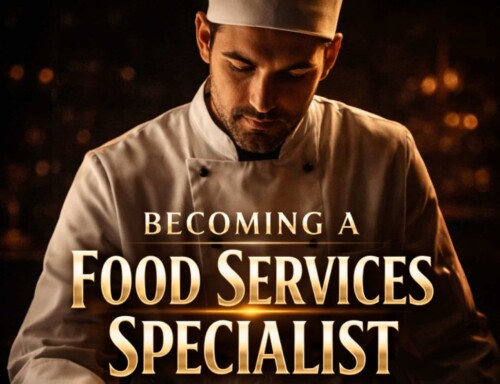
  • This 2-credit online course addresses the thinking, purpose, skill set and mind set of a Food Services Specialist. Teachers and students alike will be delighted to realize that handling, cooking, arranging, and serving food involves both skill and creativity.  This course is not only interesting, it is delicious! Click Here to View Syllabus UMass Global University Course Code: EDRU 9957

    Course Description

    This course covers the following main topics related to a career path: Restaurant and food services includes many kinds of work settings. Students should understand early that this field is much wider than one kitchen or one job title. It includes:
    • Restaurants
    • Cafés
    • Hotels
    • Catering companies
    • Bakeries
    • Food trucks
    • School cafeterias
    • Hospital food services
    • Event venues
    • Quick-service and takeaway businesses
    Each setting has its own pace and rhythm, but all of them depend on the same core values: quality, safety, teamwork, timing, creativity and service. Number of Professional Development Credits / Salary Points Teachers throughout the U.S. can earn 2 professional development credits by completing this online course or 2 graduate level credits (awarded through University of Massachusetts Global, formerly known as Brandman University). Target Audience This course is designed for all types of 6 through 12th grade teachers, including: early childhood education teachers, elementary school teachers, middle school teachers, high school teachers, special education teachers, staff, and administrators. Additional Information/Questions Here’s additional information about the Becoming a Food Specialist online professional development course:
    • This course is 100% online – the coursework and interaction.
    • You’ll have six months to complete all of your coursework from the date that you purchase this online course. If you’re enrolled in three or more 2-credit online courses simultaneously, upon request, you’ll be allowed one year to complete the course.
    • Once you’ve successfully completed the Becoming a Food Services Specialist course, you’ll earn 2 Professional Development Graduate credits.
    If you have any questions about this course, please email help@education4equity.com. Related Courses Becoming a Lawyer Becoming a Finance/Accountant Resource Resource: This online professional development class has been approved by UMass (University of Massachusettes).  
  • Becoming a Sales Person – Online Professional Development Course

    Every business, product, and organization depends on one essential function: sales. Without sales, businesses cannot grow, employees cannot be hired, and products cannot reach customers. This 2-credit online course introduces educators to the fundamentals of sales and explores how communication, psychology, trust, and decision-making shape the modern business world — equipping teachers to guide students toward a realistic, empowering understanding of what a career in sales actually looks like.

    Rather than relying on pressure or persuasion tactics, this course reframes sales around three core principles: Communicate clearly and listen carefully, Connect by building trust and understanding customer needs, and Create Value by helping people solve problems and make confident decisions. Teachers will explore how people make decisions, examine different sales careers and compensation models, and develop practical communication skills that transfer to nearly every profession — from business and entrepreneurship to education and healthcare.

    Click Here to View Syllabus UMass Global University Course Code: EDRU 9956

    Course Description

    This course covers the following main topics related to a career path:

    Introduction, Why Sales Exists in Every Industry

    Chapter 1, The World of Sales

    Chapter 2, Understanding People

    Chapter 3, What a Sales Job Actually Looks Like

    Chapter 4, How Money Works in Sales

    Chapter 5, Where Sales Fits in the World

    Chapter 6, How to Start a Career in Sales

    Final Reflection, Connecting Course Concepts to Personal and Career Goals

    Number of Professional Development Credits / Salary Points

    Teachers throughout California and the U.S. can earn 2 professional development credits by completing this online course or 2 graduate level credits (awarded through University of Massachusetts Global, formerly known as Brandman University).

    Target Audience

    This course is designed for all types of 6 through 12th grade teachers, including: early childhood education teachers, elementary school teachers, middle school teachers, high school teachers, special education teachers, staff, and administrators.

    Additional Information/Questions

    Here's additional information about the Becoming a Sales Person online professional development course:

    • This course is 100% online – the coursework and interaction.
    • You'll have six months to complete all of your coursework from the date that you purchase this online course. If you're enrolled in three or more 2-credit online courses simultaneously, upon request, you'll be allowed one year to complete the course.
    • Once you've successfully completed the Becoming a Sales Person course, you'll earn 2 Professional Development Graduate credits.

    If you have any questions about this course, please email help@education4equity.com.


    For Help

    If you have any questions about this course, please email help@education4equity.com. Related Courses Becoming a Lawyer Becoming a Finance/Accountant Resource Resource: This online professional development class has been approved by UMass (University of Massachusettes).